Why Monstera Leaves Turn Yellow After Repotting
Yellowing Monstera leaves after repotting often signal transplant shock rather than a fatal condition. Insufficient soil moisture, poor drainage, or incorrect watering practices frequently trigger this temporary stress response. Pests and a lack of bright sunlight can also contribute to the discoloration. To address the issue, maintain consistent soil moisture, verify that drainage holes remain unblocked, and apply neem oil to deter pests.
Conclusion Why Monstera Plants Gets Yellow Leaves
Plant shock often causes Monstera leaves to turn yellow shortly after repotting or relocating the specimen. This reaction frequently includes curling, brown tips, or leaf drop as the plant adjusts to its new environment. The issue usually stems from placing the plant in a significantly larger pot that retains excessive moisture. Because the increased soil volume dries out much slower, prolonged dampness around the roots triggers drooping and yellowing foliage.
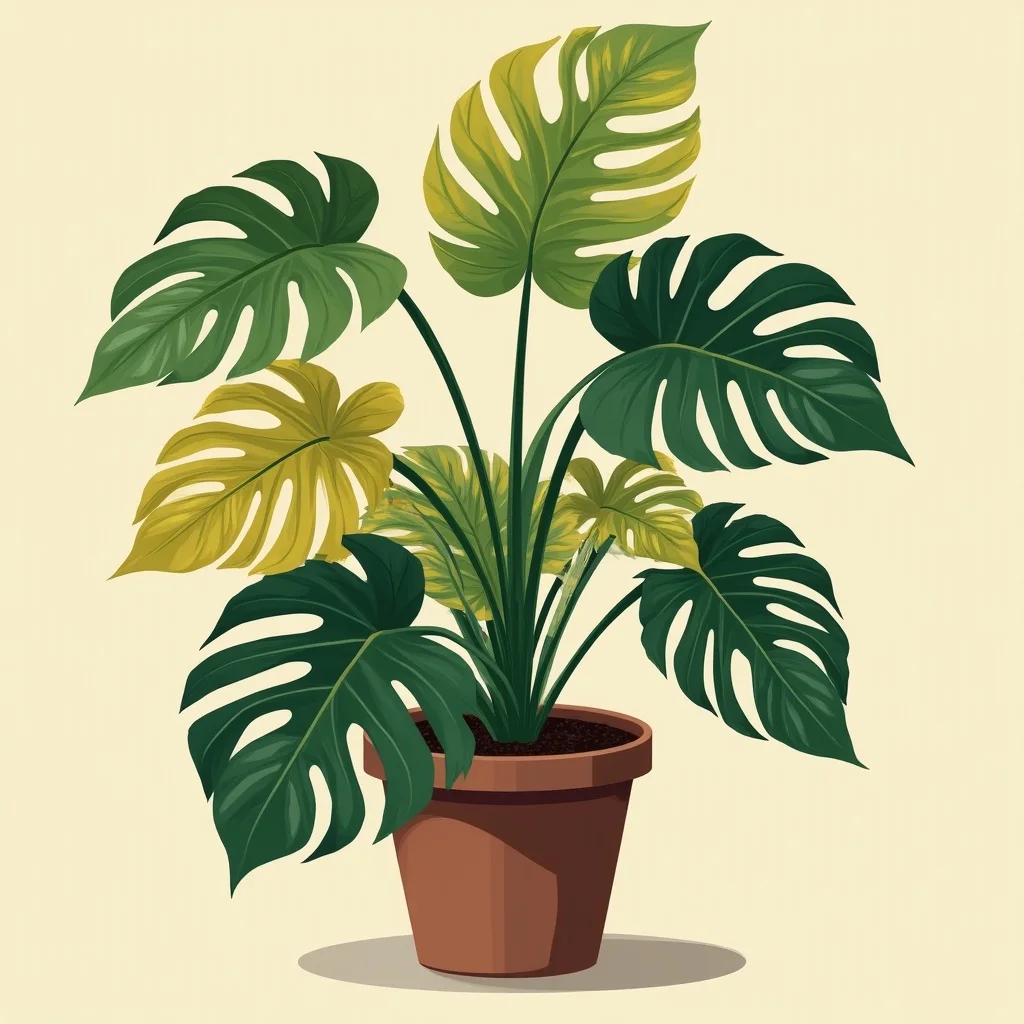
Normal Monstera Yellow Leaves After Repotting Stress
Most Monsteras show signs of stress for two to four weeks after repotting, including drooping, a pause in new growth, and occasional leaf yellowing. These symptoms usually result from transplant shock caused by sudden changes in soil conditions or roots exposed for too long during the move. As long as you provide correct light and water, the plant will re-establish itself on its own without further intervention.
Understanding Monstera Yellow Leaves After Repotting
When Monstera leaves turn yellow shortly after repotting, the cause is usually transplant shock. Disturbed roots temporarily struggle to absorb water and nutrients efficiently, which is a fairly common reaction to the physical disturbance. This temporary phase often resolves within two weeks if the plant receives proper lighting and correct watering. Providing a warm, stable environment allows the root system time to re-establish its hair before supporting green foliage again.
Common Causes of Monstera Yellow Leaves After Repotting
Monstera leaves turning yellow after repotting usually stem from three specific causes: short-term repot shock, damaged roots, or a new pot retaining moisture too long. While one to two yellowing leaves within the first two to four weeks often indicate normal transplant stress, persistent issues may signal deeper root damage or improper watering habits. Keeping care consistent during this adjustment period helps the plant stabilize without unnecessary intervention.
Yellow Monstera Leaves After Repotting Are Normal
Yellow Monstera leaves appearing shortly after repotting usually indicate transplant shock, a normal response to root disturbance. The plant is not dying but is reallocating resources to rebuild its root system. As long as the foliage does not turn excessively yellow and the soil dries normally, the specimen is simply settling into its new environment while adjusting to the increased soil volume.