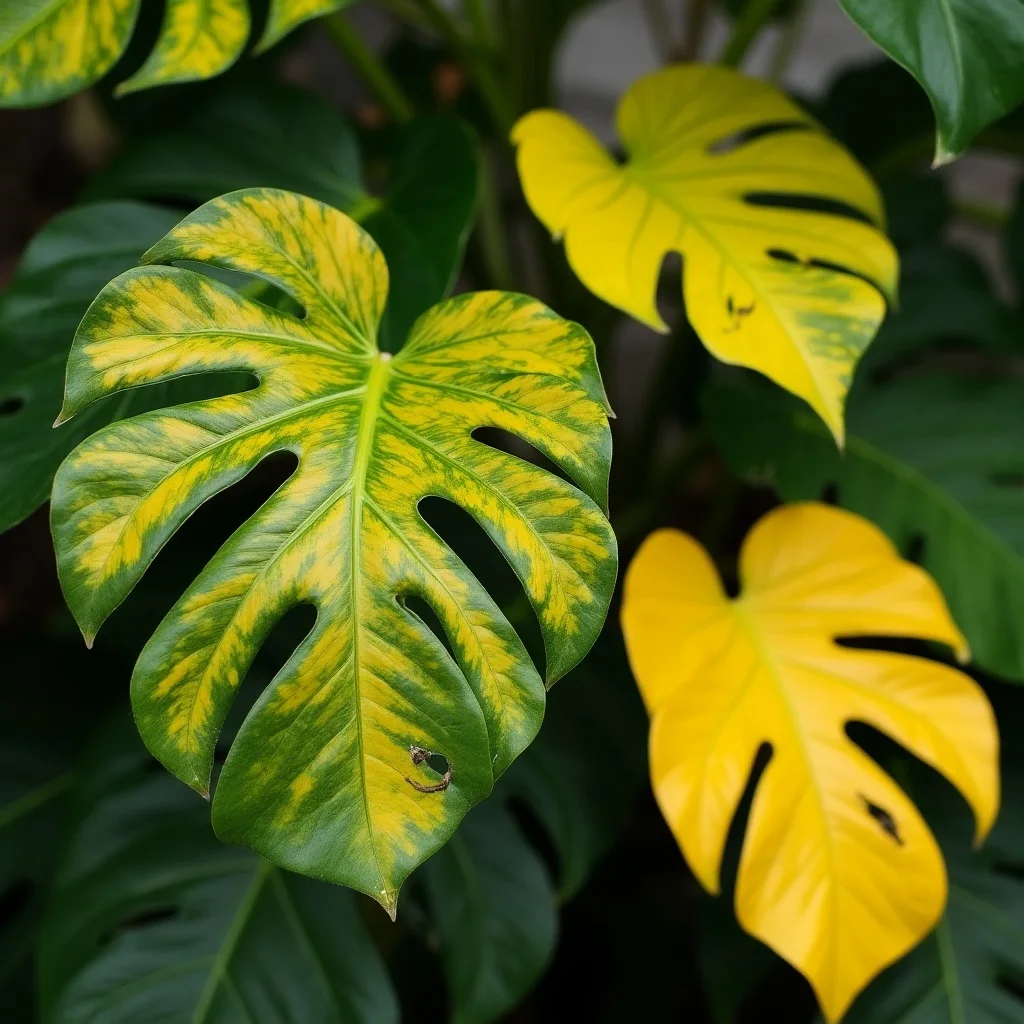
Common Causes of Yellowing Monstera Leaves
Common causes of yellowing Monstera Adansonii leaves include overwatering, which often suffocates roots, or underwatering. Other frequent factors involve nutrient deficiencies, direct sunlight exposure, low humidity, transplant shock, pests, diseases, and temperature stress. While too much feeding or root binding can also trigger this issue, light levels and environmental conditions frequently contribute to the discoloration observed in these plants.
Common Causes of Yellowing in Swiss Cheese Monstera
If your Monstera Adansonii leaves turn yellow or stems feel mushy, the soil is almost certainly the problem. These vines require a chunky, airy mix that drains fast because ordinary potting soil holds too much water and suffocates the roots. When roots sit in soggy conditions, they cannot breathe, leading to root rot and eventual decay. Immediate adjustments to watering habits and soil composition are necessary to reverse this damage if caught early.
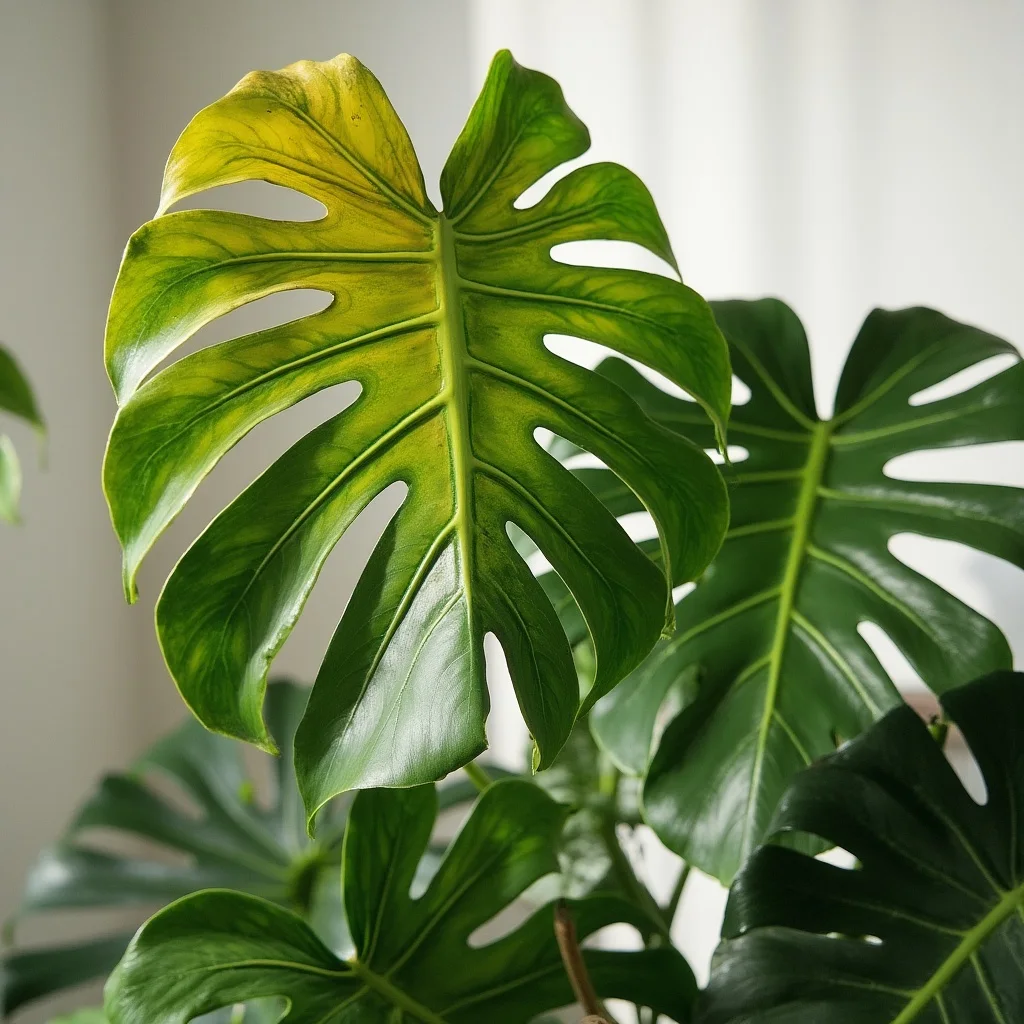
Swiss Cheese Monstera Yellow Leaves Causes and Fixes
Swiss Cheese Monstera yellow leaves often signal specific care issues rather than a single diagnosis. Excess water and poor drainage can suffocate roots, while dry soil on trailing vines suggests drought stress. Distinguishing between bottom-up yellowing on wet mix and scattered fading on dry vines helps identify whether the plant needs more moisture or simply time to adjust to its environment.
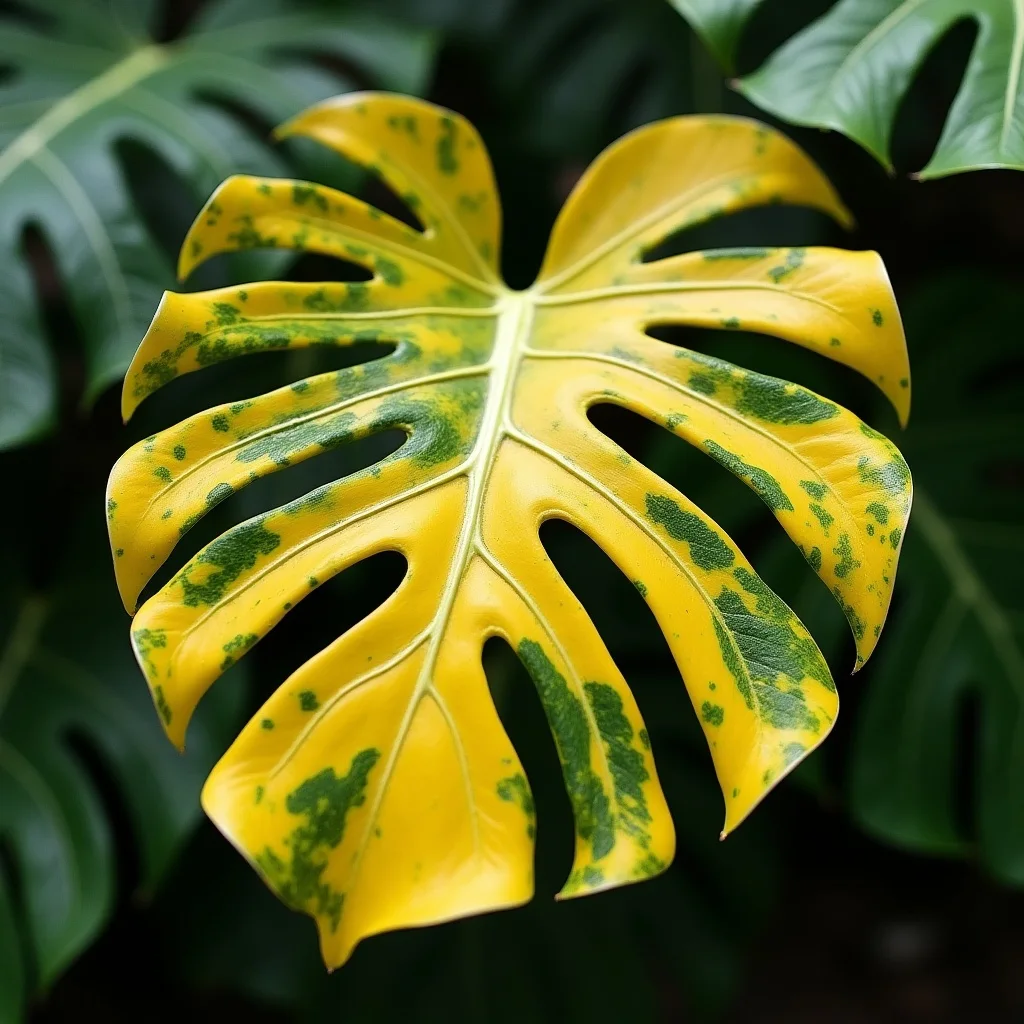
Why Swiss Cheese Monstera Leaves Turn Yellow
Yellowing on Swiss Cheese Monstera leaves often signals inadequate care rather than a single specific diagnosis. These fast-growing vining tropical aroids naturally thrive as understory plants sheltered from strong direct light by a forest canopy. When discoloration appears, it usually stems from issues like overwatering, underwatering, insufficient humidity, or nutrient deficiencies. Identifying the exact cause of the yellowing is the only effective way to stop the problem from spreading and causing further harm to the plant.